Before You Book
The questions people actually ask.
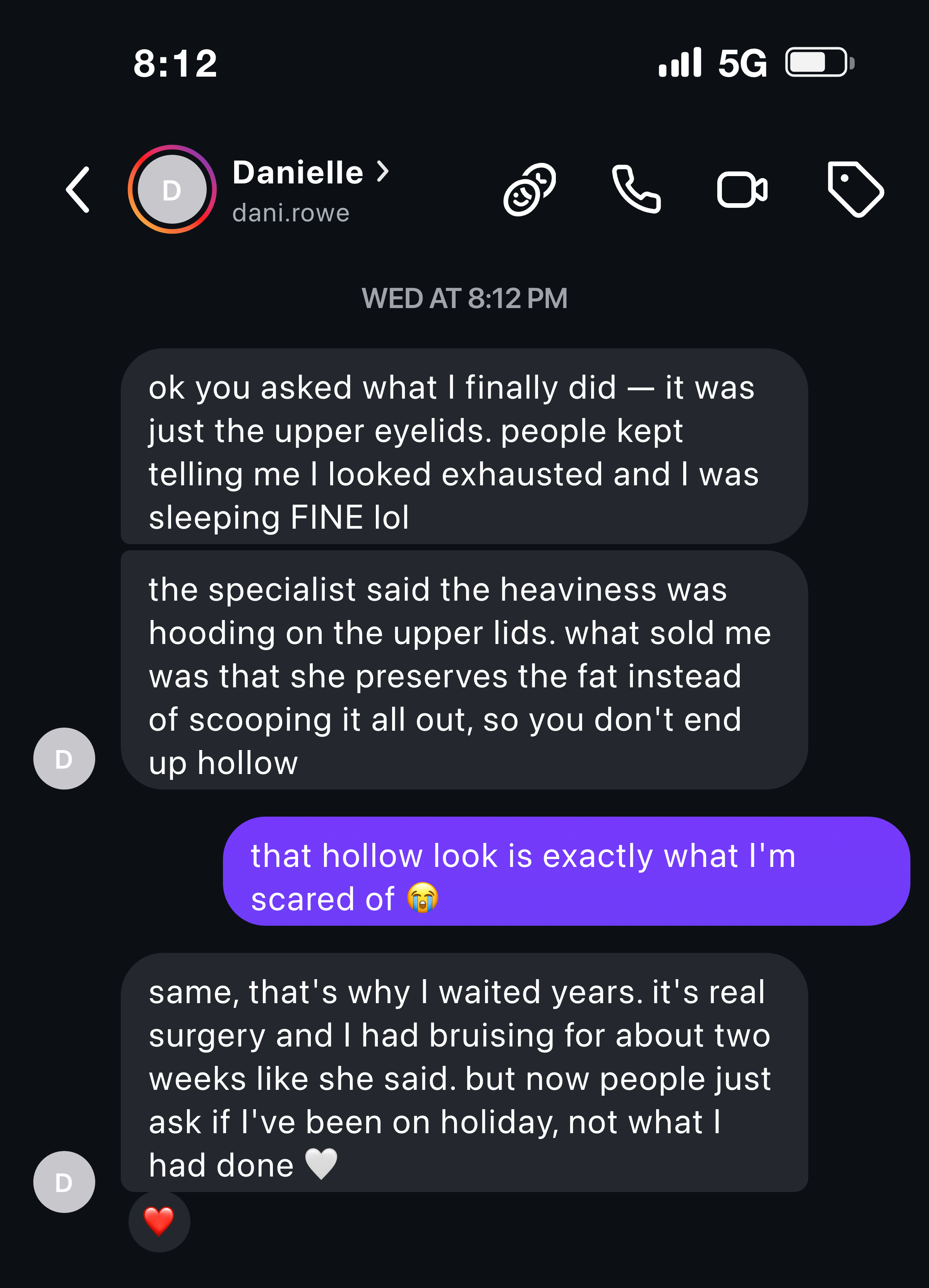
Will I end up hollow or “scooped out”?
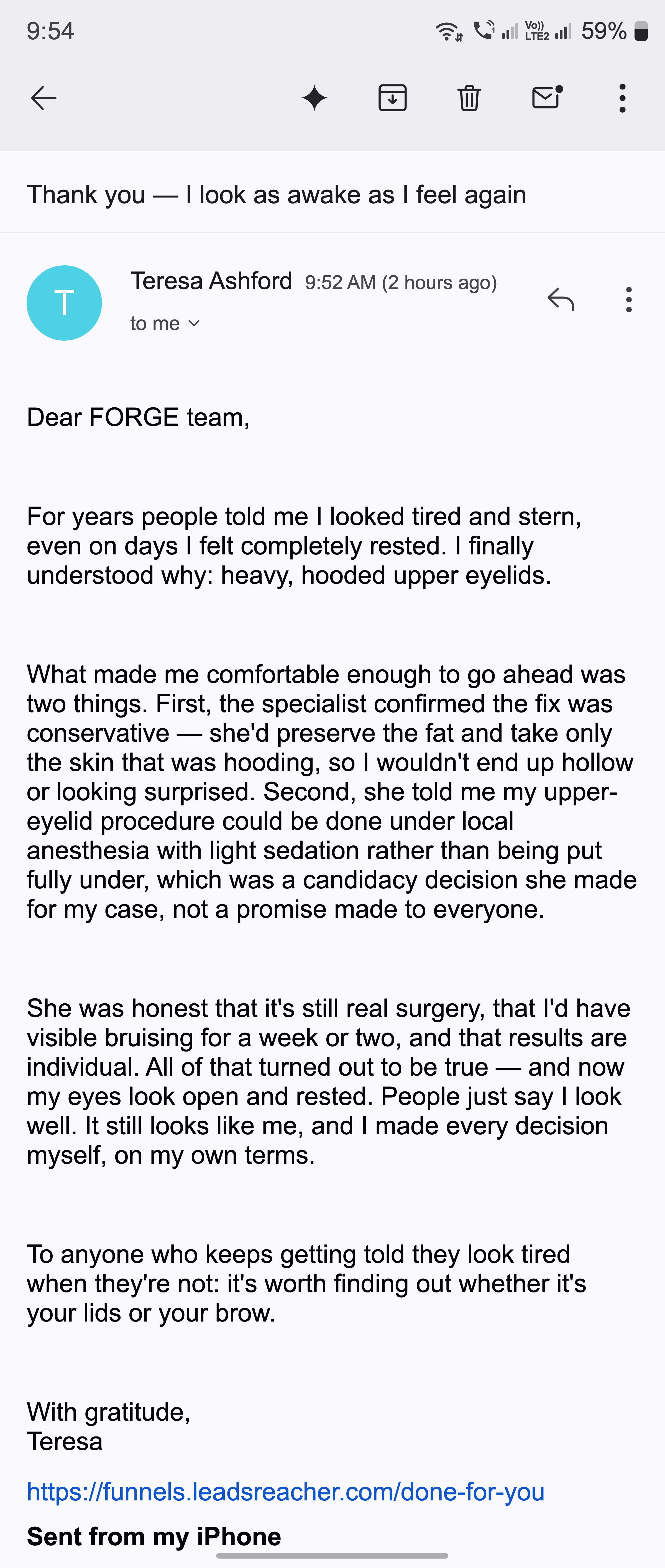
That’s the whole reason the technique matters. Older eyelid surgery aggressively removed fat, which is what can leave the upper eye looking hollow. A fat-preserving upper blepharoplasty keeps and repositions the fat and takes only the skin that’s hooding — so you look rested, not emptied out. It’s still surgery and results are individual, but natural is planned for on purpose.
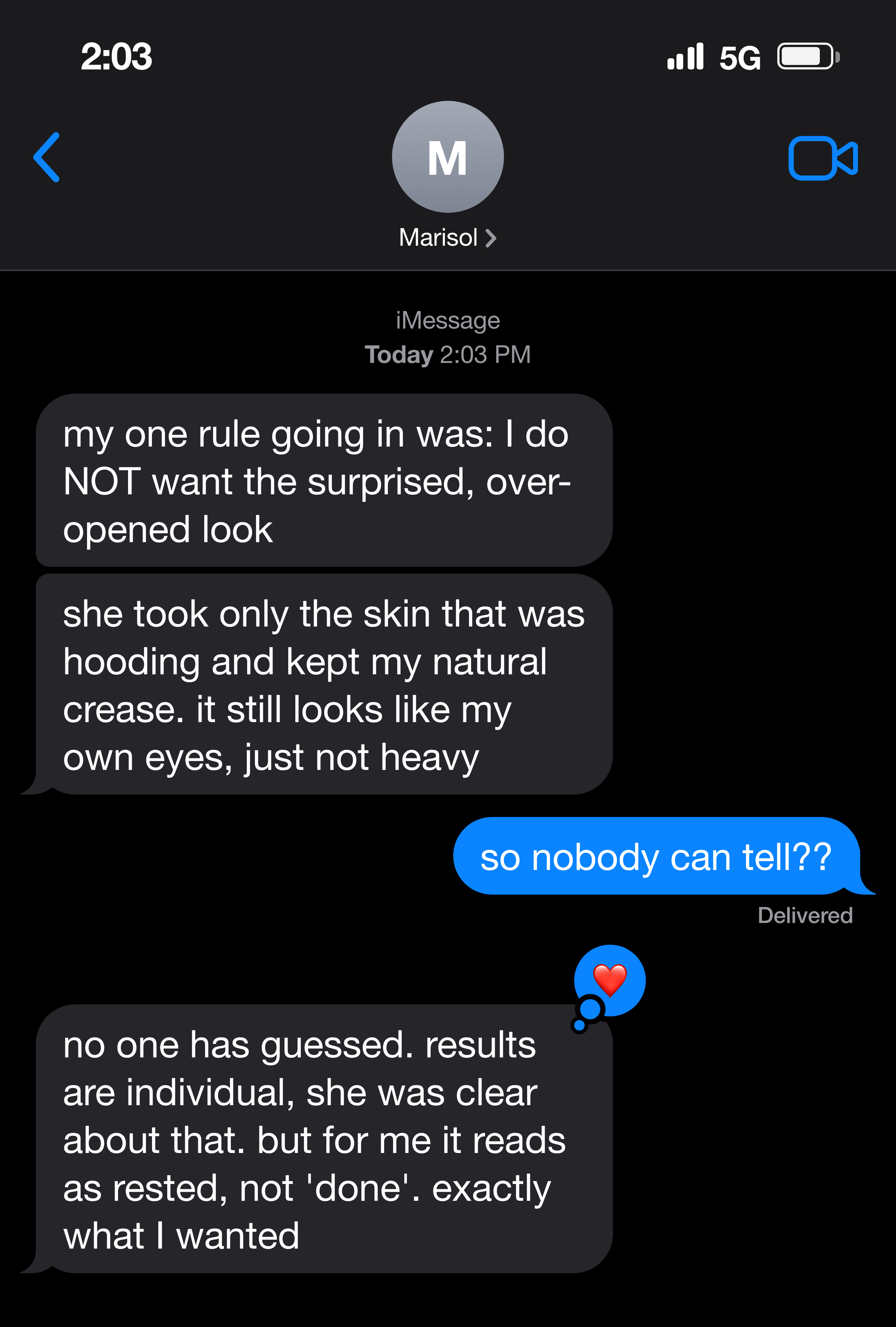
Will I look surprised or “done”?
No — that’s exactly what a specialist works to avoid. The over-opened, startled look comes from removing too much skin and losing the natural crease. Conservative skin removal and a preserved crease keep your eyes looking like your own, just less heavy. People should say you look well-rested, not ask what you had done.
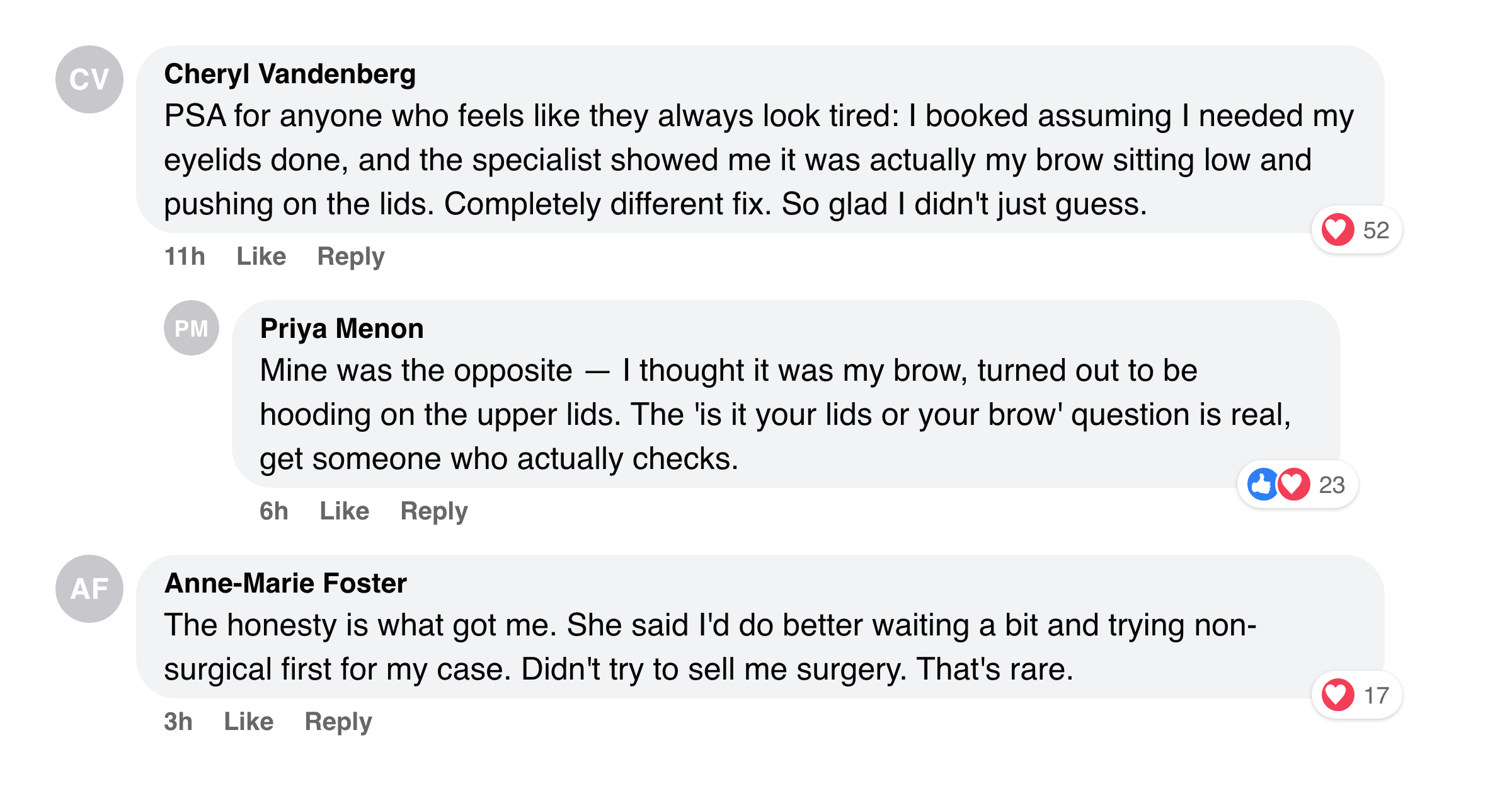
Is it my lids, or my brow?
It can be either, and it genuinely changes the plan. Hooding on the upper lids is treated with an eyelid procedure; a low, heavy brow pressing down on the lids is treated with a brow approach — and sometimes it’s both. Doing the wrong one is how people end up disappointed, which is why a specialist checks in person. The 60-second assessment gives you a first read.
How long does upper eyelid surgery last?
An upper-eyelid refresh is one of the longest-lasting facial procedures — often a decade or more* — because the skin that’s removed doesn’t simply return the way it was. It’s a stated average, not a guarantee, since you keep aging naturally afterward. Your specialist gives you a realistic range for your own eyes at the consultation.
Do I have to go under general anesthesia?
Often not. Many upper-eyelid procedures can be done under local anesthesia with light sedation rather than being put fully under — but whether that’s right for you is a candidacy decision your surgeon makes for your case, not a promise made to everyone. Either way it’s real surgery, and your specialist confirms the safest approach for you in person.
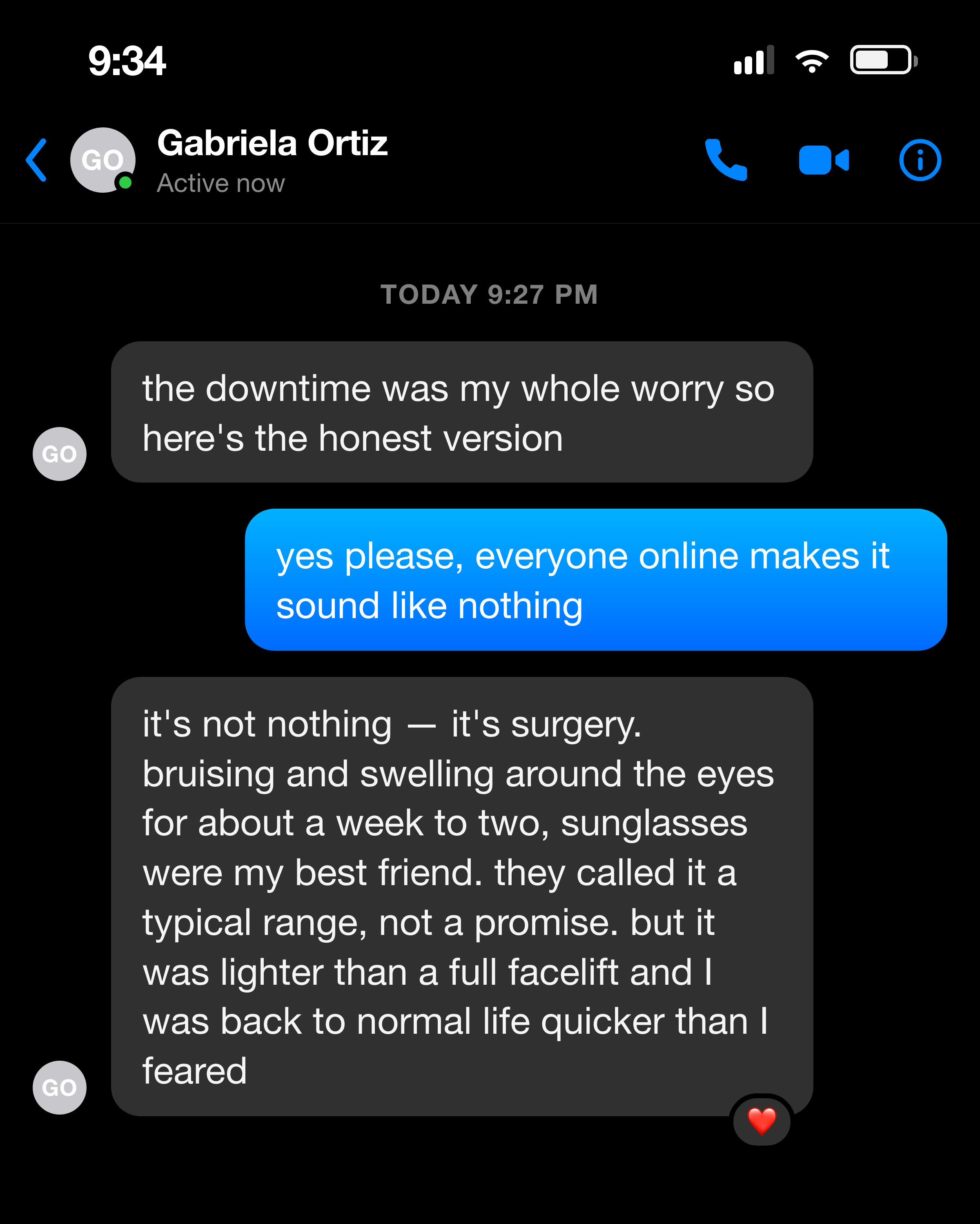
How much downtime and bruising, really?
Honestly: visible swelling and bruising around the eyes for roughly one to two weeks, worst in the first few days, with many people back to routine in about a week to ten days (sunglasses help). The lid crease keeps settling for a few months. These are typical ranges, individual, and never guaranteed — no “lunchtime” promises. It is lighter than a full facelift, but it’s still real recovery.
What’s the difference between upper and lower eyelid surgery?
Upper eyelid surgery addresses hooding and heaviness on the upper lid — the classic “tired eyes” refresh. Lower eyelid surgery addresses under-eye bags and puffiness, and often repositions fat rather than removing it. They’re different procedures with different recoveries; some people do one, some do both. Your specialist advises which actually fits your eyes.
Could insurance cover any of this?
Sometimes, in part. When hooding on the upper lids is severe enough to block your upper or side vision, the functional portion of an upper-eyelid procedure may be partly covered by insurance when medically indicated — typically documented with a visual-field test. We’ll help you check. The purely cosmetic refresh isn’t covered, and we’d never disguise one as the other. It’s an honest conversation, not a coverage promise.
What about the cost?
Fees are a private conversation, discussed one-to-one with the practice at your consultation once a plan is designed for your eyes — every plan is different, so there’s no one number to post. The consultation itself is free and no-obligation. Asking is welcome; it’s exactly what the consult is for.
How do I know if I’m even a candidate?
The 60-second assessment gives a first read in about a minute — including whether it’s more likely your lids or your brow. It isn’t a diagnosis — a board-certified eyelid specialist confirms candidacy, and the right timing, at your free private consultation, for patients 18 and over.