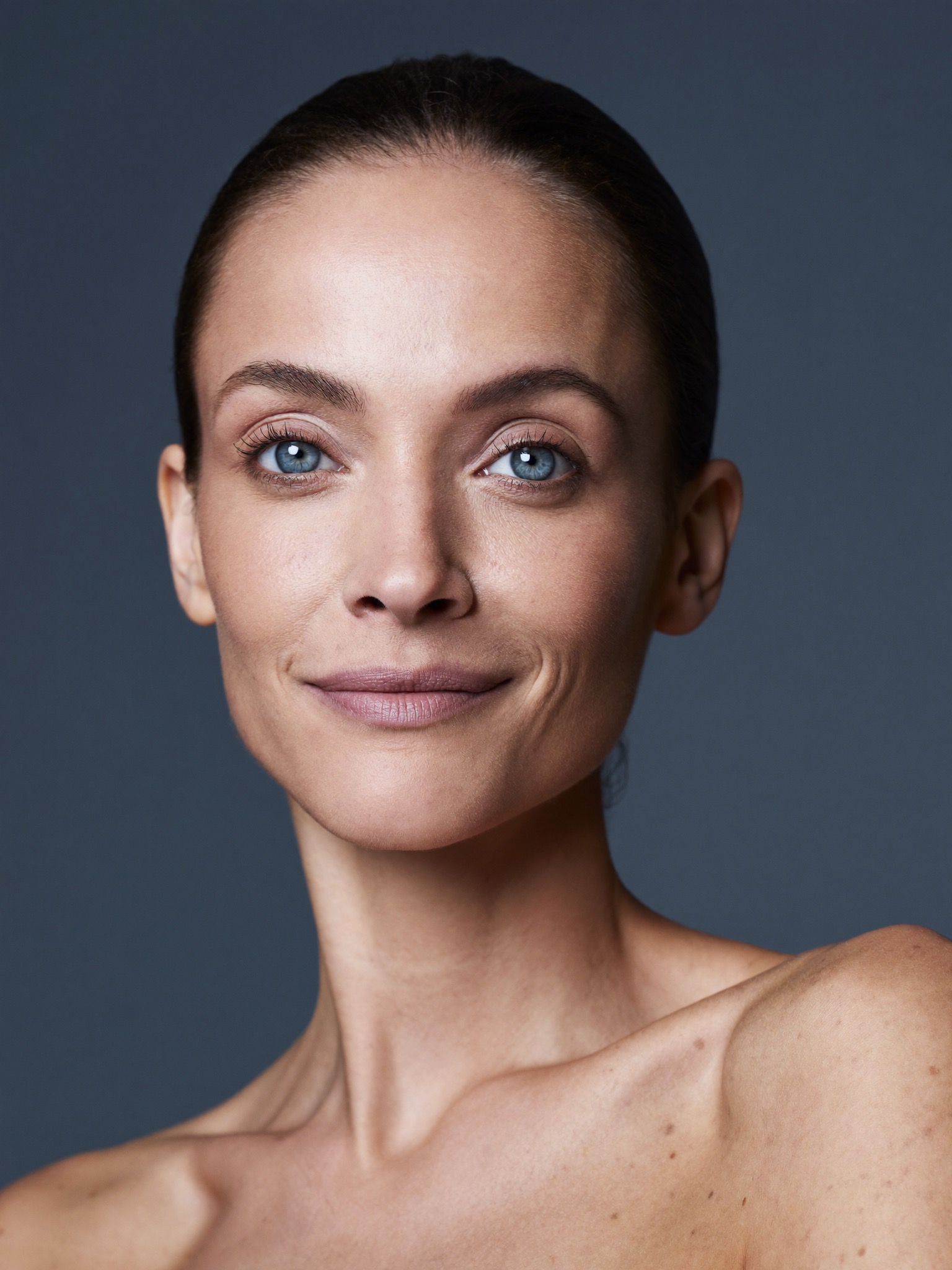
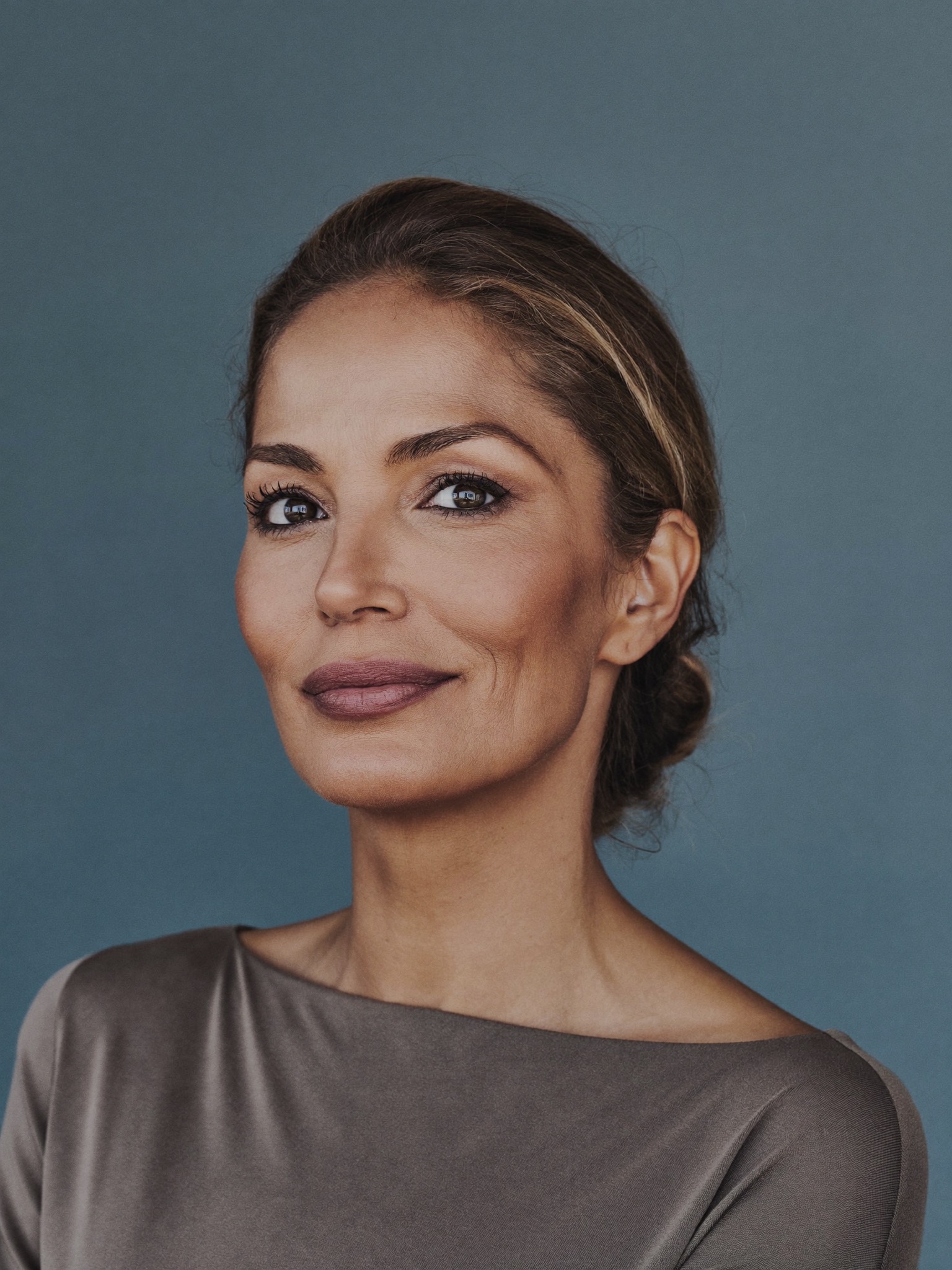
People keep saying you look tired. Even when you’re not.
Hooded, heavy upper eyelids are one of the first places aging shows — and they can make you look tired when you feel wide awake. An upper-eyelid refresh with a specialist opens the eye area with a conservative, fat-preserving technique. See if you’re a candidate, and preview your own eyes in 3D before you decide anything. No full facelift required.
A refresh this delicate is about who does it — here’s who you’re meeting
Board-Certified*Facial-plastic surgeon
Eyelid Specialist*Oculoplastic focus
Accredited FacilitySurgical standard
3D ImagingPreview your eyes*
Fat-Preserving*Natural, never hollow
The KELVIN approach
The technique is why it looks rested — not “done.”
An eyelid refresh isn’t about removing as much as possible. The difference between “rested” and “hollow” is a conservative, measured hand — and knowing exactly what to leave alone.
Upper eyelids · fat-preserving blepharoplasty
Refined precisely — not just cut away.
A modern upper blepharoplasty removes the exact amount of loose, hooded skin and preserves the fat that gives the eye its natural fullness, rather than aggressively hollowing it out. The incision sits in the natural crease of the lid, where it’s designed to settle discreetly.
Older “take it all” approaches can leave eyes looking hollow, startled or over-operated — exactly the “done” look most people are afraid of.
Is it your lids — or your brow?
The first thing a specialist checks.
Sometimes “tired eyes” aren’t the eyelids at all — a low or heavy brow can push down on the lid and create the same look. They’re different operations with different recoveries.
Getting this right is the whole reason to see a specialist first: an eyelid refresh on lids that are really a brow problem won’t give you the result you wanted.
Which technique fits you — and whether it’s lids, brow or both — is confirmed by your specialist in person. “Fat-preserving,” “conservative” and “natural” describe an approach; upper blepharoplasty is real elective surgery, planned and measured, with real recovery and real risk.
The “tired eyes” diagnostic
Where is the tiredness actually coming from?
“You look tired” usually traces back to one of three things — and they’re not the same operation. The 60-second assessment helps point to which; your specialist confirms it in person.
The lids
Hooded, heavy upper eyelids
Extra skin folds over the lid, sometimes resting on the lash line — the most common cause, and what upper blepharoplasty is built for.
Upper-eyelid refresh (blepharoplasty)
Fat-preserving, natural result
One of the lighter facial recoveries
The brow
A low or heavy brow
A brow that has descended can push down on the lid and create the same “tired” look — a different operation your specialist checks for first.
Brow position assessment
Often the real cause of “heavy” eyes
Sometimes paired with the lids
The under-eye
Bags & lower-lid puffiness
Puffiness or shadowing beneath the eye is a lower-eyelid concern — often addressed by repositioning fat to smooth, rather than hollowing.
Lower-eyelid refresh
Fat-repositioning where suitable
Honest, visible bruising for a spell
Lids, brow or both?
Not sure which one is yours?
Most people don’t know — and guessing is exactly how people end up with the wrong operation. The 60-second assessment gives a first read on whether it’s your lids, your brow, or both, then your specialist confirms it in person and shows you the difference in 3D.
The eyes are unforgiving. That’s why the specialist matters.
“A millimetre changes everything around the eyes. My job is to make you look rested, like yourself on a good night’s sleep — never hollow, never startled. I’ll show you your own eyes in 3D, tell you honestly whether it’s your lids or your brow, and if you’re not a candidate, I’ll tell you that too.”
Board-certified* surgeon with an eyelid / oculoplastic focus — the eye area is the whole craft
Fellowship-trained*, operating in an accredited facility
A natural-results philosophy — and the judgment to say “it’s your brow, not your lids”
Specialist, credentials and introduction are illustrative and demo-labeled for this proof build; your practice’s real surgeon, credentials and video mount at onboarding.
See your eyes before you decide
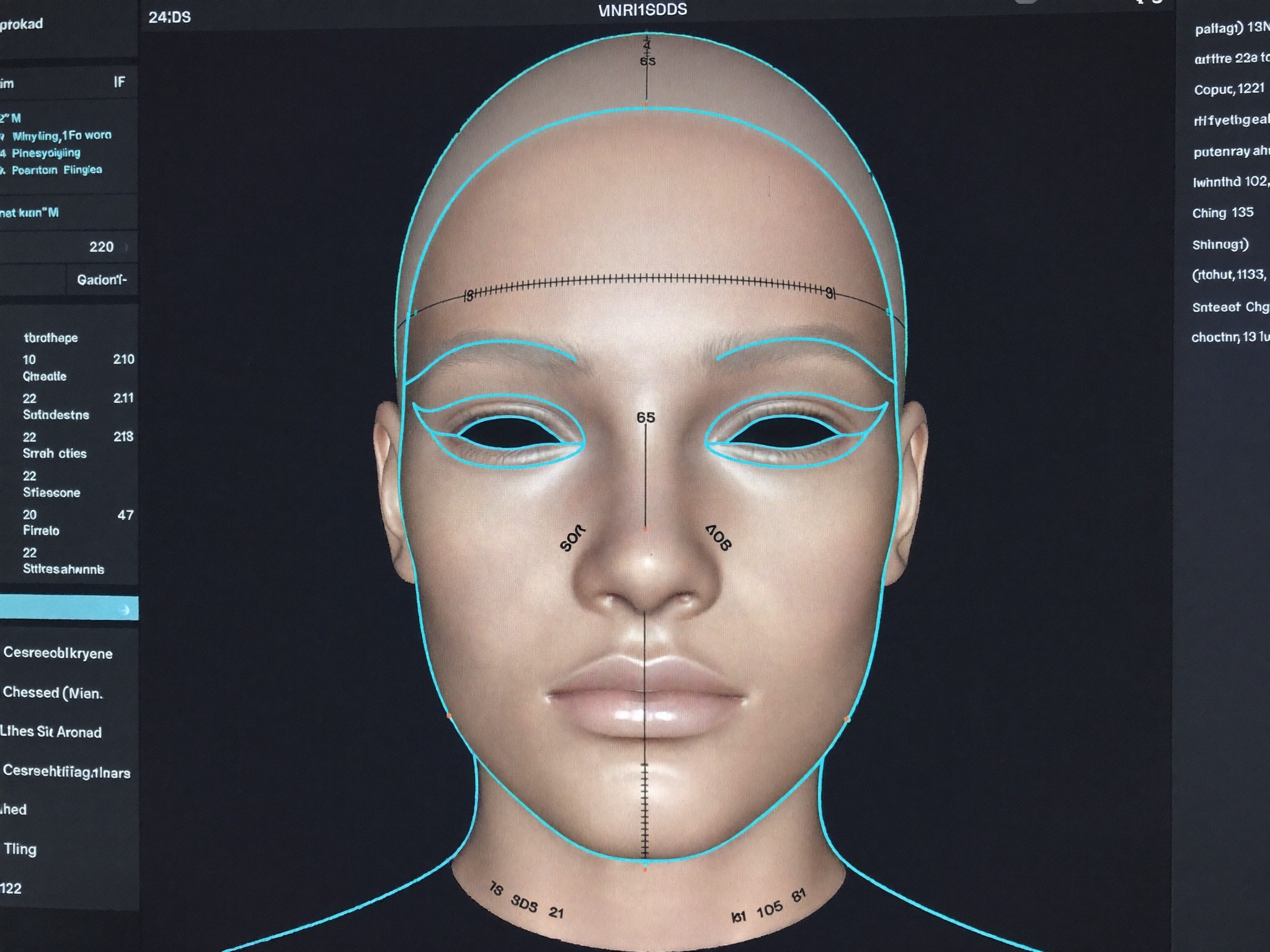
A 3D preview of your own eyes.
The biggest fear with eyelid surgery is a small change that looks like too much. A 3D preview answers the real question — how open, how rested? — before you commit to anything.
Measured to the millimetre, explained in plain language.
Using 3D imaging, your specialist maps the upper-lid area on your own face and plans the change with you — how much hooding to release, what fullness to keep, and whether the brow plays a role. You see the direction, discuss it, and adjust it together, instead of guessing from a stranger’s photos.
A 3D preview is a simulation, not a guarantee. Results vary, and a consultation is required. On-site 3D imaging is confirmed per practice.
The number-one fear with eyelid surgery is a hollow, startled or over-done look. A conservative, fat-preserving approach is built to answer it.
1
Only the hooding, not the fullness
The technique removes the loose, hooded skin and preserves the fat that keeps the eye naturally full — so the result reads rested, not scooped out.
2
Still your eyes
The goal isn’t to change your eyes — it’s to un-tire them. You should still look completely like you, only less exhausted.
3
The scar hides in the crease
The upper-lid incision is placed in the natural fold of the eyelid, where it’s designed to settle so it’s difficult to see once healed.
“Fat-preserving” and “conservative” describe an approach, not a no-risk promise. Upper blepharoplasty is real elective surgery with real risk and a real recovery — including visible bruising and swelling — and your specialist will be honest about both.
Around the eyes
The eye area is one small, delicate region — and its own specialty.
Upper lids
Upper-eyelid refresh
Removes hooded, heavy skin the fat-preserving way — the most common “tired eyes” fix.
Lower lids
Under-eye & bags
Smooths puffiness and shadowing by repositioning fat where suitable — not hollowing.
Brow
Brow assessment
Checks whether a low or heavy brow is the real cause — often it is.
Vision
Functional (heavy lids)
Where lids genuinely affect your side vision, part of it may be covered when medically indicated — we’ll help you check.
Together
Combined eye refresh
Upper and lower, or lids and brow — only what your result actually requires, planned as one.
Later
A front door that ladders up
Many start with the eyes and decide the rest later — there’s no pressure to do more than you want.
Real results — on the page, never on ads
Open, rested eyes — on faces like yours.
The proof of “natural” is seeing a range of real, age-appropriate eyes — refreshed, not changed. Drag to compare.
After · illustrativeOpen & rested
BeforeBefore
Illustrative placeholder · not a real patient
An abstract placeholder for layout only. Real, consented before-and-after photos of natural, age-appropriate eyelid results mount at onboarding — shown here on the page only, never on ads. Individual results vary and are never guaranteed.
Are you a candidate for an eyelid refresh? Find out privately.
Eight quick taps, about a minute. At the end, a measured first read on whether it’s your lids, your brow, or something to check further — and your next step: meeting your specialist and seeing your own eyes in 3D. It’s a first read, not a diagnosis. Your answers stay private.
Ready when you are0%
Is it your lids, your brow — or neither? Find out in about a minute.
A private eyelid assessment: a few quick taps, then a measured first read and how to meet your specialist and see your own eyes in 3D. There’s no diagnosis and no obligation.
Question 1 · What you notice
What bothers you most about your eyes?
This is the one that shapes everything else. Choose what stands out most when you look in the mirror.
Hooded, heavy skin on my upper eyelids
A heavy or low brow, or a “weighed-down” feeling
Under-eye bags or puffiness
Just an overall tired, exhausted look
Not sure — help me figure out which
Question 2 · What people say
Do people tell you that you look tired — even when you’re well-rested?
A rough sense is plenty. Your specialist confirms what’s truly at play before anything is planned.
Often — it’s a running comment
Sometimes, or in photos
My eyes/lids feel heavy by the end of the day
Not really — it’s more the look than a feeling
Question 3 · About you
Which age band are you in?
This just helps calibrate your read — an eyelid refresh is for adults 18 and over.
Under 30
30–44
45–54
55–64
65 or over
Question 4 · The look you want
What kind of result appeals to you?
There’s no wrong answer — this calibrates the tone of your read.
Very natural & subtle — just less tired, no one should be able to tell
Noticeably more open and refreshed
Not sure — I’d like to see options in 3D
Question 5 · Your biggest hesitation
What’s holding you back the most?
Whatever you pick, your read will speak to it directly. This is the honest one.
Looking hollow, startled or “overdone”
Downtime & visible bruising
A visible scar on my eyelid
Not sure it’ll make a real difference
Choosing the wrong surgeon
Question 6 · Prior surgery
Any prior eyelid or facial surgery?
No — this would be my first
Yes — happy, and considering more
Yes — I’d like to revise / correct a prior result
Question 7 · Health & readiness
Which best describes your health right now?
An honest answer protects your result — some things are simply best confirmed first.
Generally healthy, no eye problems
I get dry eyes or wear contact lenses
On blood thinners / significant medical history
Question 8 · Timing
How are you thinking about timing?
I feel ready to begin
In the next 3–6 months
6–12 months out
Just researching for now
Upper lids · one more question
About your upper lids specifically…
This helps tell a purely cosmetic refresh apart from a functional one — which can matter for how it’s handled.
They rest low enough that they affect my side vision
They feel heavy — I sometimes lift my brow to see
It’s purely how they look — my vision is fine
I’m not sure
Measuring your answers…
Matching your inputs to a candidacy read
Last step
Where should we send your read?
We’ll send your candidacy read and help you reserve a complimentary, private consultation with a board-certified eyelid specialist — meet the specialist, see a 3D preview of your own eyes, get honest guidance. No obligation.
No obligation60-second assessmentYour info stays private
◆ Candidacy Diagnostic · complete
Candidacy read · a first read
◆ Board-certified* eyelid specialist · a first read, not a diagnosis. Individual results vary.
A board-certified eyelid specialist confirms your candidacy at your complimentary private consultation — and will tell you honestly if you’re not a candidate, or should wait.
Reserve your complimentary private consultation
Free and no-obligation — meet your specialist, see a 3D preview of your own eyes, and get honest guidance on what’s right for you.
[ GHL calendar mounts here in production — Method A iframe + form_embed.js ]
Reserve Your Consultation
Choose a day and time that suits you.
Complimentary and no-obligation — about 20–30 minutes with the specialist’s coordinator. Availability shown is illustrative for this demo.
Select a day
Select a time
Choose a day above to see available times.
Free & no-obligation · 18+ · the coordinator confirms by text and email. No surgery is booked at this step.
✓
You’re booked.
The specialist’s coordinator will confirm your complimentary private consultation by text and email shortly — no action needed from you until then.
What to expect next
A member of the practice confirms your appointment by text and email, usually within one business day.
A brief call or message beforehand to understand your goals and answer early questions.
At the consultation: meet your specialist, see your own eyes in a 3D preview, and get an honest read on candidacy — with no obligation.
This reserves a complimentary, no-obligation consultation — not a surgical booking. Candidacy is confirmed by a board-certified eyelid specialist, in person, for patients 18 and over. You may reschedule or step back at any point.
Your recovery
One of the lighter facial recoveries — honestly mapped.
Eyelid surgery is on the gentler end as facial procedures go, but it’s still surgery — and honesty is the point. Here are realistic, typical ranges; your specialist confirms yours.
First few days
Swelling & bruising peak
Expect visible bruising and swelling around the eyes, often at its most noticeable in the first two to three days. Cool compresses and rest help; most people plan a few quiet days.
About 1–2 weeks
Presentable again
Sutures are typically removed around a week; visible bruising usually settles enough to be camouflaged with a little makeup by roughly one to two weeks. Typical ranges, never a guaranteed timeline.
Weeks to months
The fine result settles
Residual puffiness and any tightness ease over the following weeks, and the incision in the lid crease continues to fade — the refined, rested result keeps settling.
One honest note
It’s still surgery
Dry-eye sensations, temporary blurring or light sensitivity can occur early and typically settle — your specialist reviews the real risks with you before anything is planned.
Your journey
From “you look tired” to open, rested eyes.
A considered decision, made calmly — one clear step at a time.
1
Step one
Meet your specialist
A private, complimentary consultation — no pressure.
2
Step two
3D preview & plan
See your own eyes in 3D and plan the change together.
3
Step three
Procedure day
In an accredited facility, with your board-certified specialist.
4
Step four
Recovery
Honest, supported, one of the lighter facial recoveries.
5
The result
Rested & yours
Open, rested eyes — you, only less tired.
Keep what makes you, you
Un-tired — never changed.
The aim of an eyelid refresh isn’t to give you new eyes — it’s to give you back the rested version of your own. We protect the shape and character of your eyes and the fullness that keeps them looking natural. You should still look completely like yourself — just less exhausted.
Your eye shape, keptYour expression, naturalRefresh, never changeStill unmistakably you
A patient’s story
She just wanted to stop looking exhausted.
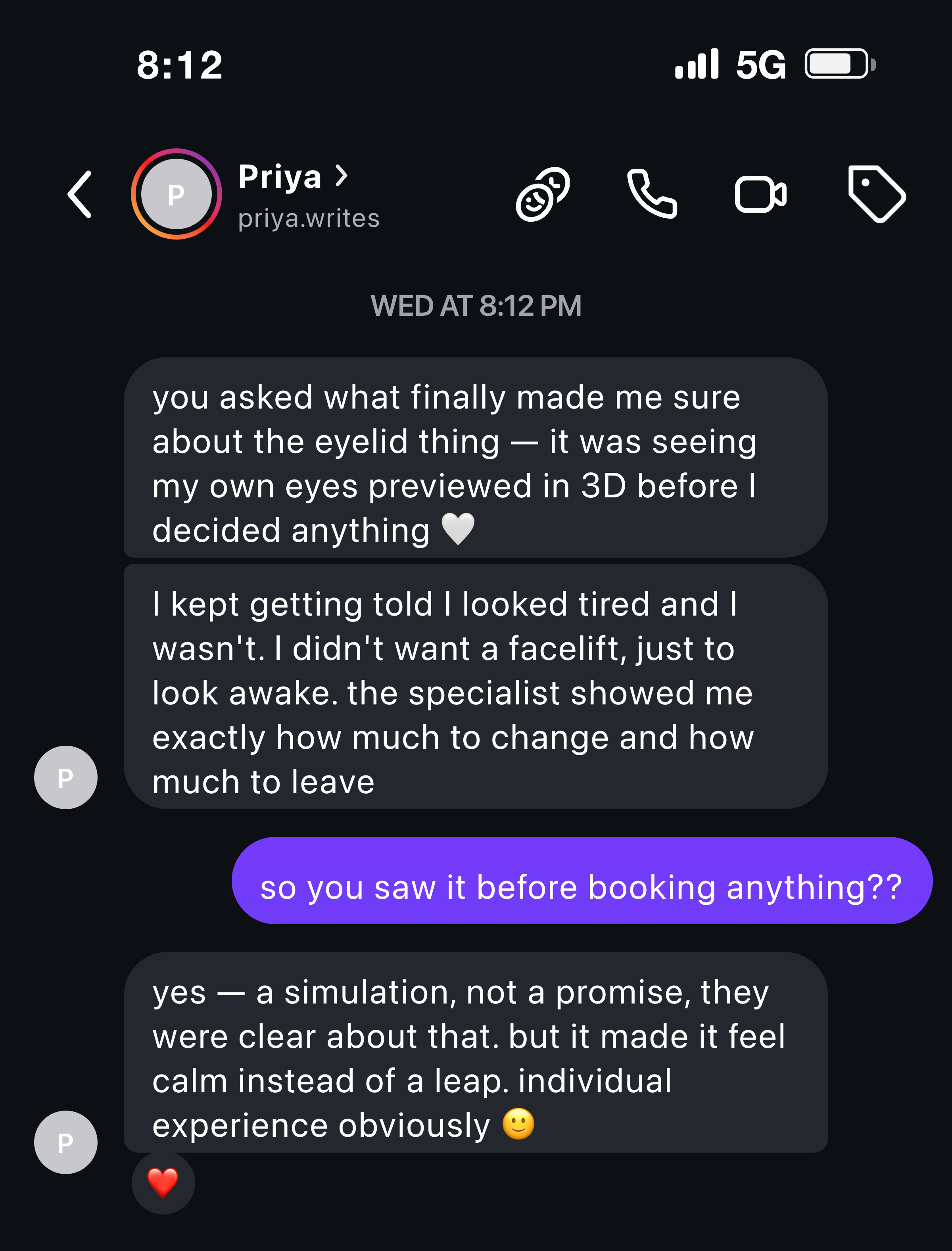
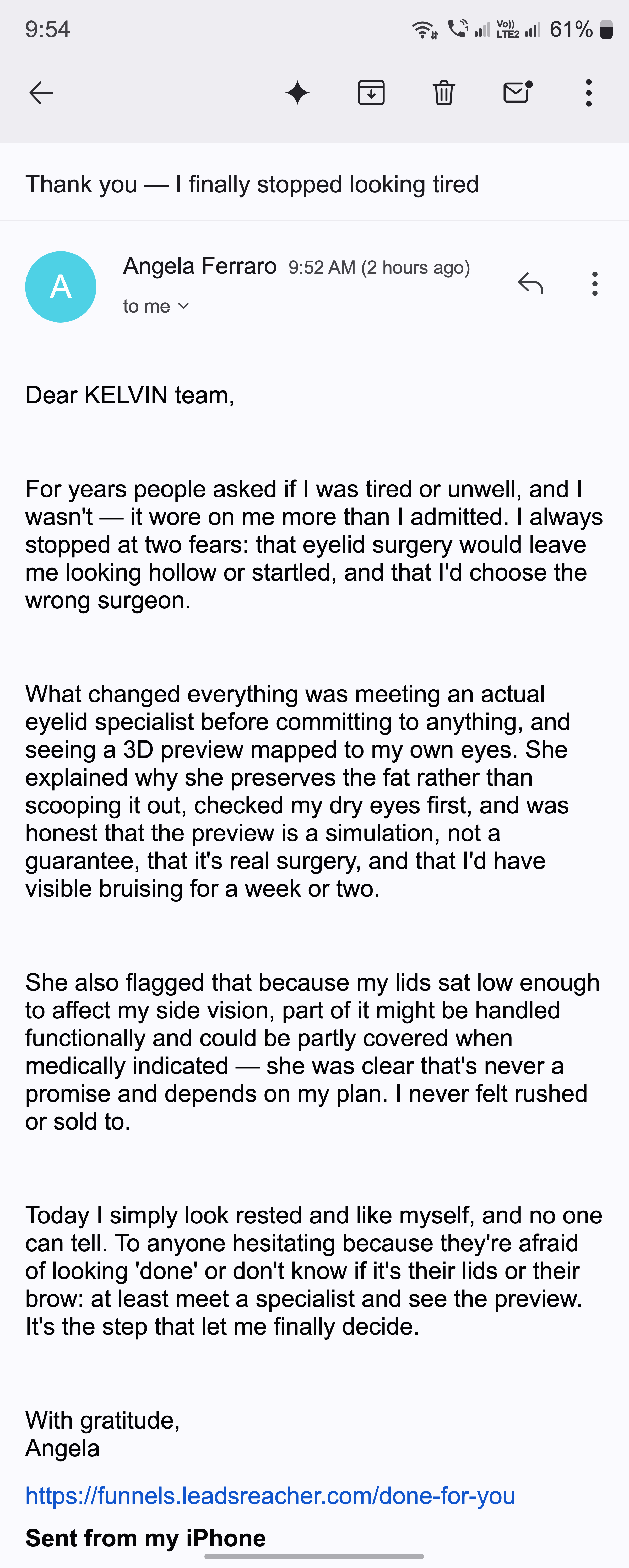
“For years people asked if I was tired or unwell — I wasn’t. The specialist actually showed me it was mostly my upper lids, with a little from the brow, and previewed it in 3D on my own face. I didn’t want a facelift, just to look awake again. Now people ask if I’ve been on holiday. I still look like me — just not exhausted.”
Marion K. · upper-eyelid refresh Illustrative · demo testimonial, not a real patient
In their words
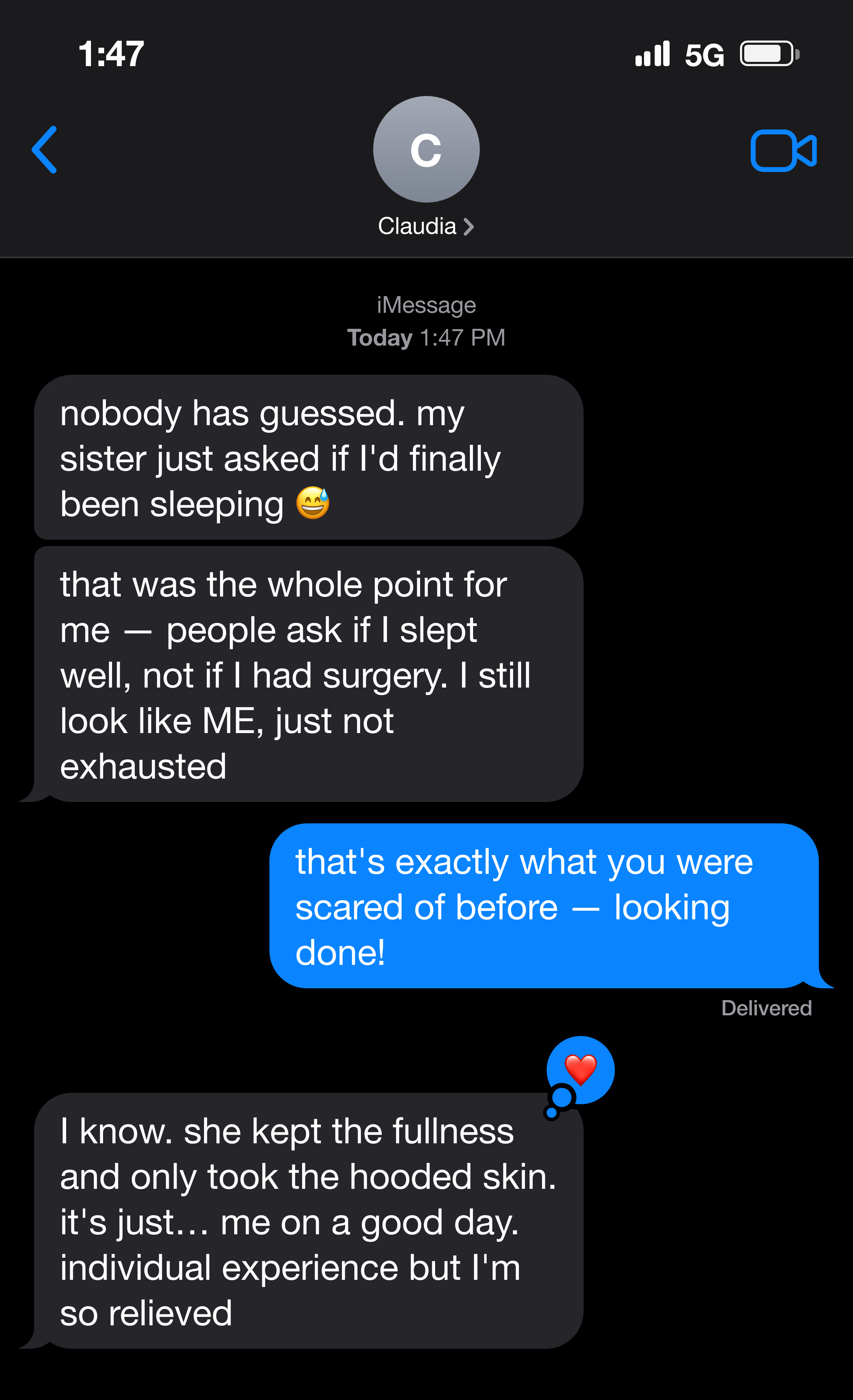
“People ask if I slept well — not if I had surgery.”
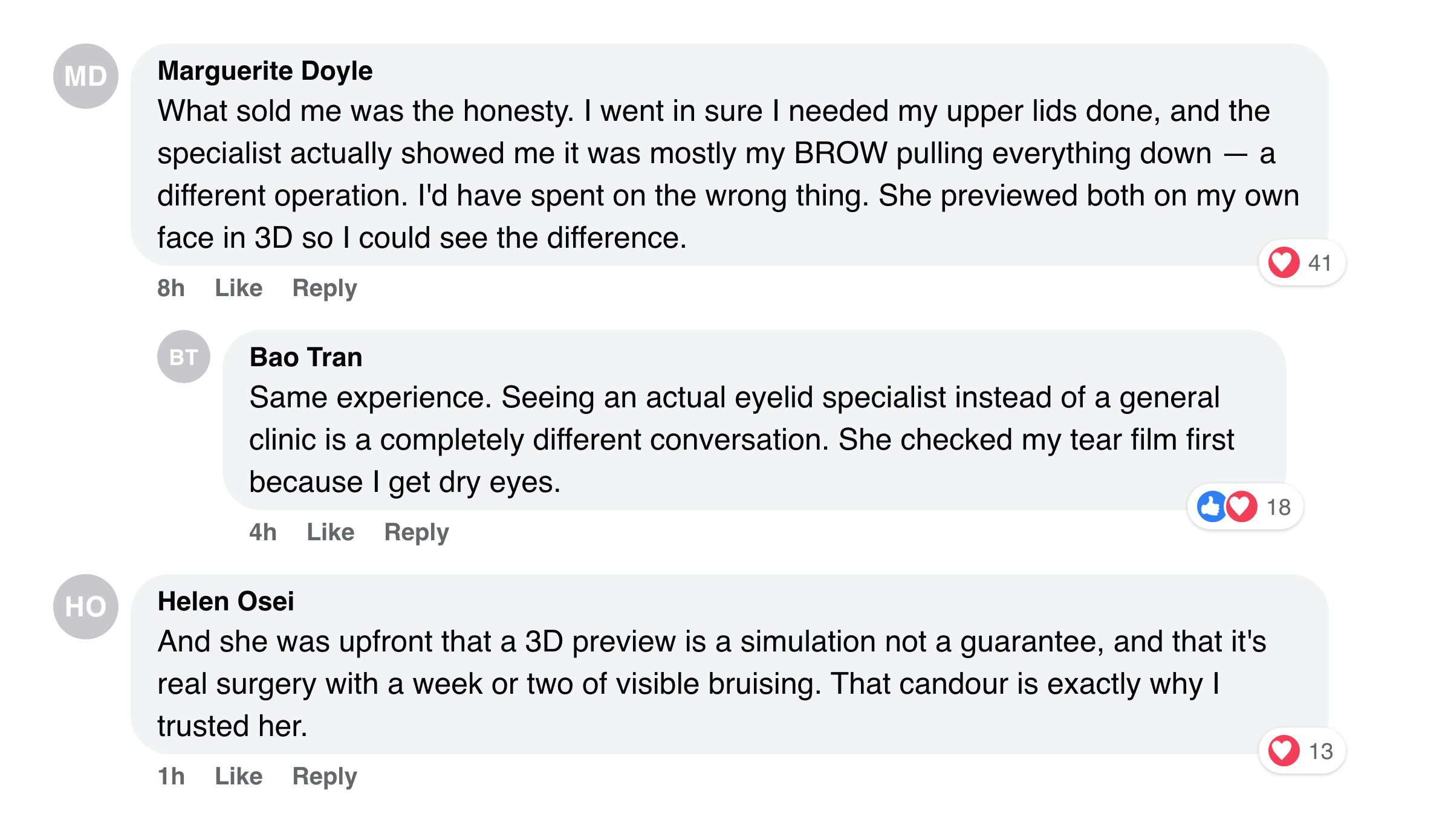
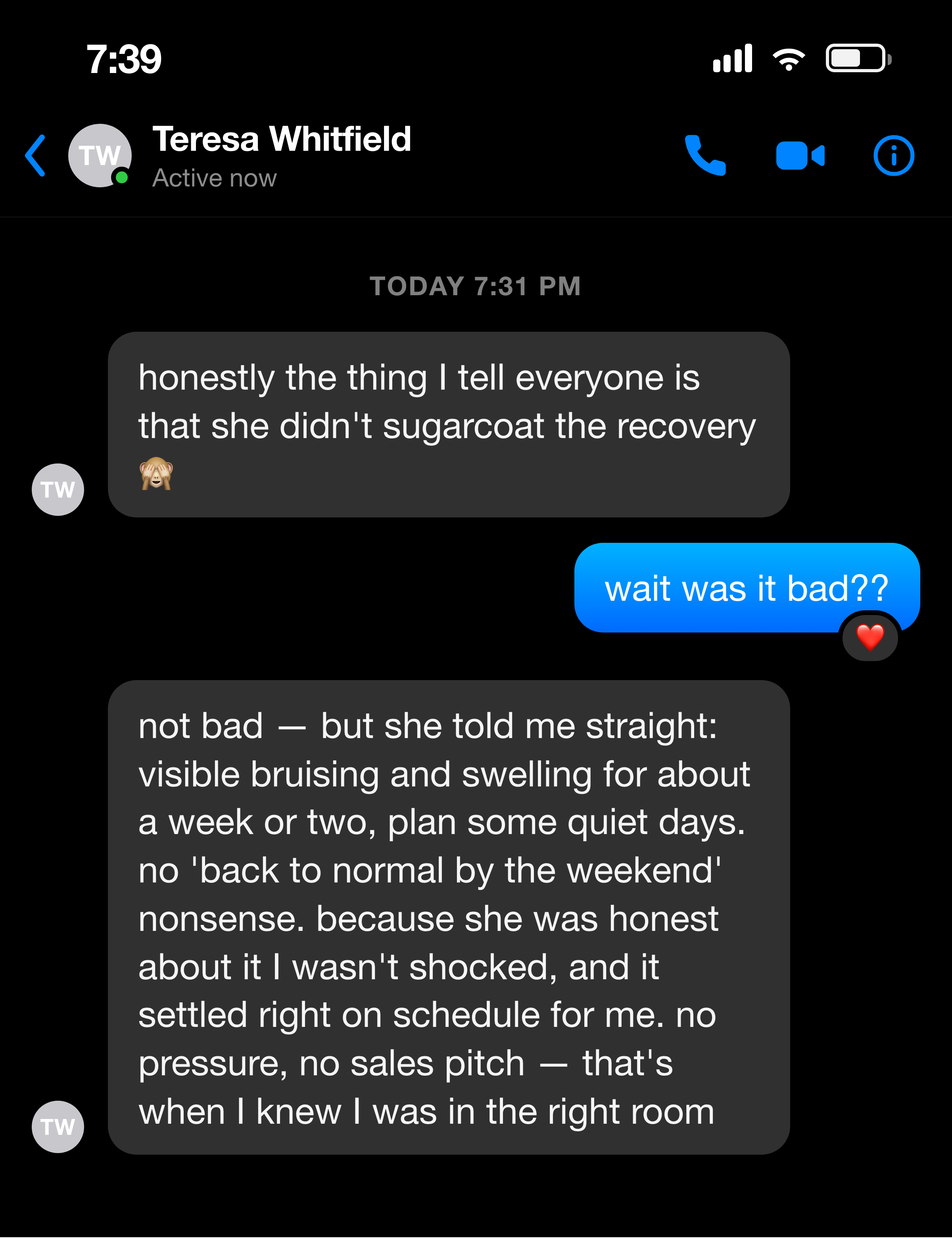
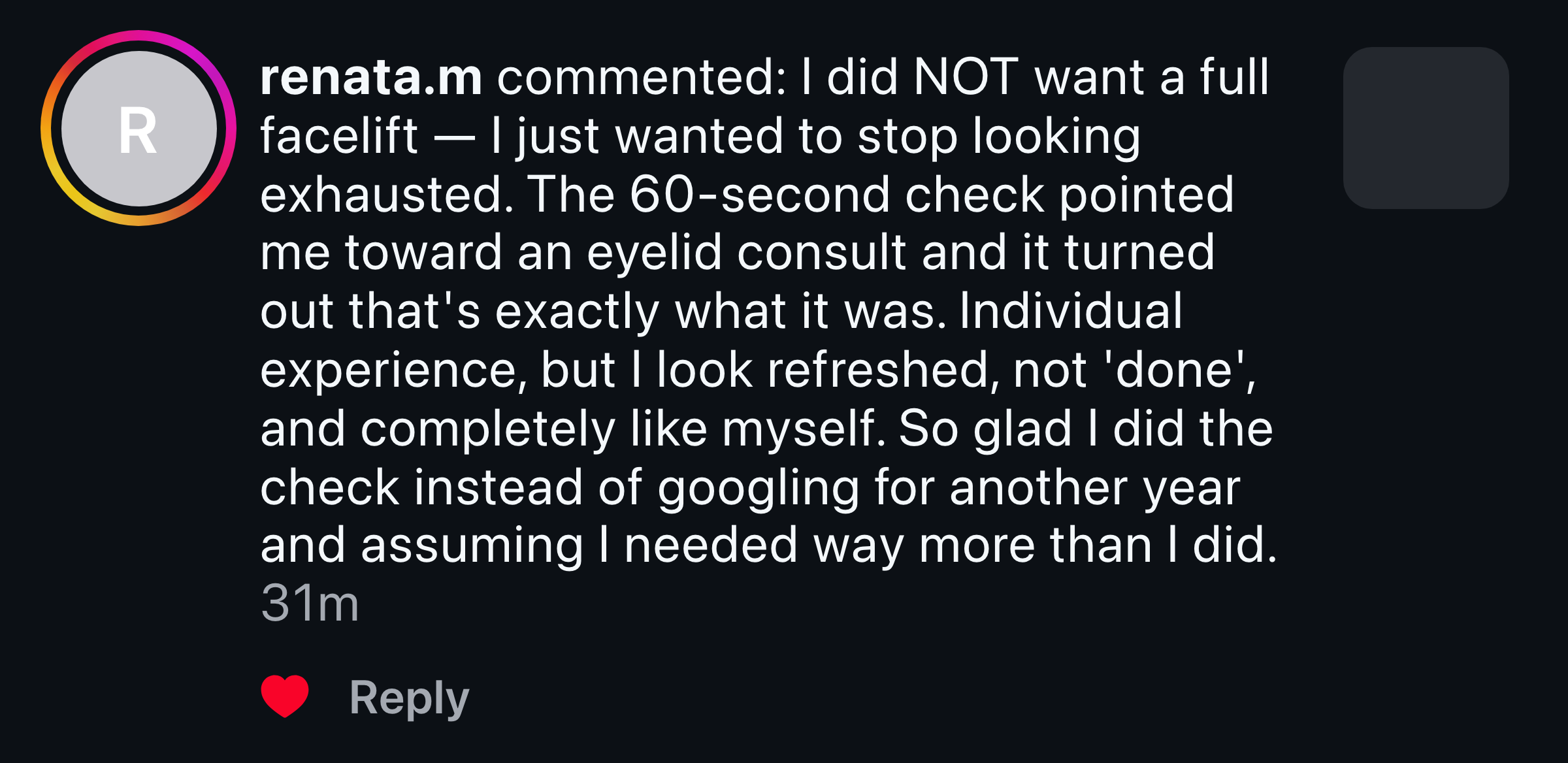
What patients mention most isn’t the procedure — it’s meeting the specialist, being told honestly whether it was lids or brow, and seeing their own eyes in 3D first.
Demonstration screenshots · replaced with your practice’s real, permissioned reviews at onboarding
Honest guidance
We’ll tell you the truth — even if it’s “it’s your brow” or “not yet.”
A complimentary, private consultation with a board-certified eyelid specialist: an honest read on your candidacy, a 3D preview of your own eyes, and a plan built around them. If it’s really your brow, or you’re not a candidate, or you should wait or sort something first — we’ll tell you that too. No pressure, no obligation. That honesty is the reassurance.
Board-certified* specialistAccredited facilityComplimentary private consultAn honest “it’s your brow” when it is3D eye previewNo obligation
Questions, answered honestly
Eyelid surgery FAQ
Will my eyes look hollow, startled or “overdone”?
That’s the single most common fear — and it’s exactly what a conservative, fat-preserving technique is built to avoid. Rather than removing as much as possible, the specialist takes only the loose, hooded skin and preserves the fat that keeps the eye naturally full, so the result reads rested, not scooped out. Your specialist plans to your eyes, never to a template.
How do I know if it’s my eyelids or my brow?
You often can’t tell from the mirror — and it matters, because they’re different operations. A low or heavy brow can push down on the lid and create the same “tired” look. Checking this is one of the first things a specialist does, and it’s a big reason to be assessed in person before deciding on any procedure. The 60-second assessment gives a first read; your specialist confirms it.
What is recovery really like?
Eyelid surgery is one of the lighter facial recoveries, but it’s still surgery, so we’re honest about it. Expect visible bruising and swelling around the eyes, usually most noticeable in the first few days; sutures typically come out around a week, and bruising usually settles enough to camouflage by roughly one to two weeks. These are typical ranges, never guaranteed timelines.
Will there be a visible scar?
For an upper-eyelid refresh, the incision is placed in the natural crease of the lid, where it’s designed to settle discreetly and be difficult to see once healed. As with any surgery there is a scar; your specialist explains exactly where it sits and how it’s expected to mature.
Do I need a full facelift instead?
Often, no — and that’s the point of this front door. Many people who look “tired” simply have heavy upper lids, and an eyelid refresh addresses that without a facelift. If more would genuinely serve you, your specialist will say so honestly — and if the eyes are all you want, that’s completely fine.
My heavy lids affect my vision — is that different?
It can be. Where upper lids rest low enough to genuinely obstruct your side vision, the functional portion may be partly covered by insurance when medically indicated — we’ll help you check with your plan and its criteria. We never promise coverage, and a purely cosmetic refresh is not covered; it’s all confirmed honestly at your consultation.
I get dry eyes / wear contacts — does that matter?
It’s worth mentioning, yes. Your specialist will check your tear film and eye health first, because eyelid surgery can affect dryness in the short term. It’s usually a routine step that protects your comfort and your result — a step, not a stop — and occasionally a reason to plan carefully or wait.
How accurate is the 3D preview?
A 3D preview is a planning tool to explore the direction together on your own eyes — it is a simulation, not a guarantee, and individual results vary. It removes a lot of the guesswork about “how open, how rested,” but a consultation is still required, and on-site 3D imaging is confirmed per practice.
Can I start with a private virtual consultation?
Yes. A complimentary virtual consultation is a common first step — you can meet your specialist and review your goals before ever travelling in.
Your next step
Meet your specialist. See your eyes in 3D. Then decide.
One private, complimentary consultation — the specialist, the 3D preview of your own eyes, and honest guidance on whether it’s your lids, your brow, or neither. That’s how you make a confident decision.